
126
Economist explores human stories behind development_我的网站

一 | New Delhi, Oct 10 (UNI) A delegation of Congress leaders on Monday told the Election Commission that no violation of the Representation of the People Act was done during the Bharat Jodo Yatra, and the NCPCR complaint of children being used for electioneering is baseless.
A delegation of Congress leaders including general secretary Jairam Ramesh, spokesperson Supriya Shrinate and senior leader Salman Khurshid met Election Commission officials to reply to a notice by the poll watchdog over a complaint by the National Commission for Protection of Child Rights (NCPCR).
The Congress leaders also filed a complaint against BJP functionaries alleging they were using children in a "malafide" and "perverse" way.
"We met the election commission on a lot of frivolous complaint filed by the NCPCR which is meant to protect children's rights. Instead they are electioneering, and making all sorts of bogus allegations," Shrinate said.
"We have filed a counter complaint against BJP and it's functionaries on how they are using children in a malafide way and a rather perverse order," she said.
Ramesh said the ECI was informed that no violation of the Representation of People's Act or any Model Code of Conduct was done.
"We told the ECI that in the Bharat Jodo Yatra,
neither the representation of people's act has been violated, nor any model code of conduct has been violated. So we fail to understand why did the ECI send us a notice. We gave a detailed document how the NCPCR has filed childish complaint that children are being used," said Ramesh.
"Rahul Gandhi ji went for prize distribution in a painting competition for 15 minutes, and it is being said children are being used for election," he said.
The Congress leader said the NCPCR, a body created during the UPA regime for ensuring protection of rights of Children, is now being headed by "BJP, RSS functionaries ".
"Thousands of people are coming everyday, children are coming with their parents, their families, everyone wants to click a selfie with Rahul ji. There is nothing illegal about that," he said.
"There is no election campaign happening. Rahul Gandhi ji is not telling children to vote for Congress... NCPCR was formed during UPA regine for ensuring child rights. Now for the first time it is being headed by workers of BJP, RSS," he said.
Khurshid said they told the ECI that other agencies should not give their work to the poll panel, and it is not good for the functioning of the commission. He also said that ECI is meant to watch over elections and there is no context of any poll in this case.
The NCPCR headed by Priyank Kanoongo had asked the ECI to carry out an inquiry and initiate necessary action against the Congress and Rahul Gandhi for allowing children to take part in its Bharat Jodo Yatra.
UNI AO SHK2157。
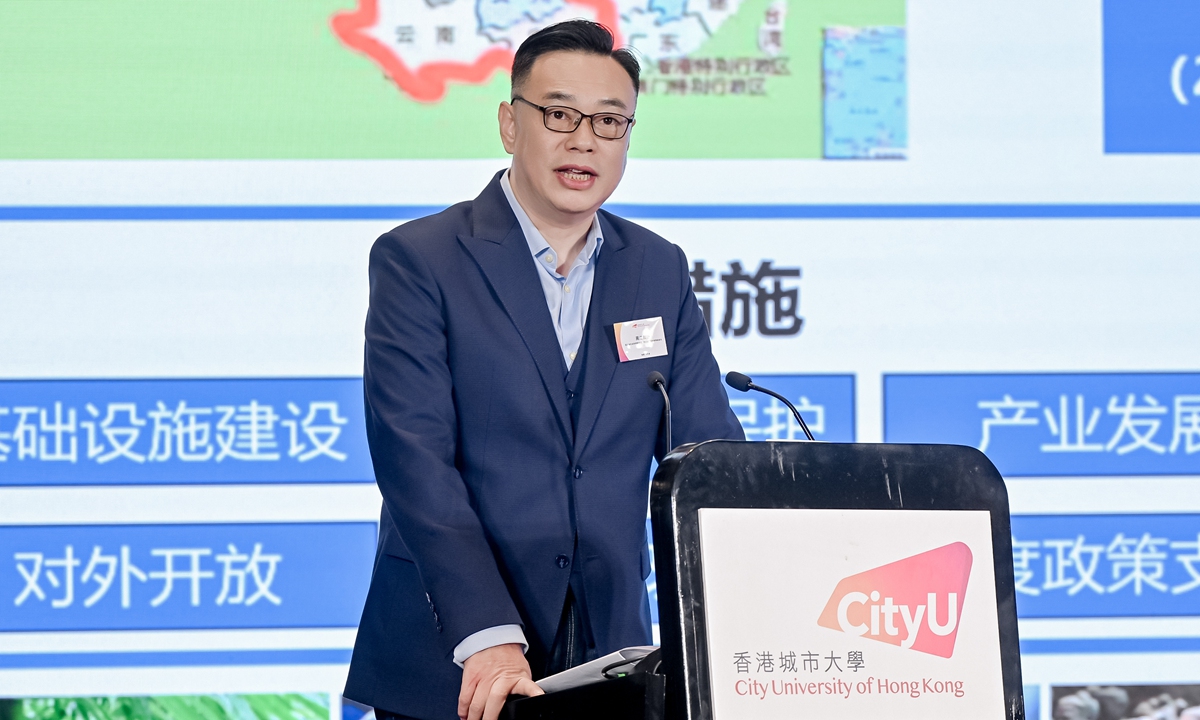
Zhou Jiang, a researcher at the Sichuan Academy of Social Sciences, has a favorite book: White Deer Tableland or Bai Lu Yuan by renowned writer Chen Zhongshi.
As vice president of the Regional Science Association of China (RSAC), Zhou told the Global Times that a lifetime of reading has profoundly shaped the way he sees and understands the world. It ultimately led him to a career in research and academia, where he teaches and pursues scholarly work.
Since earning his PhD in economics in 2000, he has devoted himself to the study of regional science and economics, a field that demands a constant crossing of disciplinary boundaries, drawing on the fields of geography, sociology, history, and ecology among others.
"Reading has kept alive my sense of curiosity and taught me to ask questions with patience and persistence: Where do disparities in regional development come from? How do policies affect different groups in society? And how can a region pursue both efficiency and equity so that development is not merely effective, but also imbued with a greater sense of humanity and warmth?" Zhou noted.
Founded in 1991, RSAC is a national academic society dedicated to advancing domestic and international academic exchange and cooperation, providing consulting services on spatial planning, urbanization, and regional development, and offering intellectual support for China's modernization drive.
The 57-year-old researcher noted that reading has empowered him in two distinct ways.
"The first is discernment. When confronted with a complex issue, I try not to settle for a simple conclusion. Instead, I make an effort to understand its broader context, how it has unfolded, and the perspectives of the different people involved," he said.
"The second is a sense of inner steadiness. Setbacks are an inevitable part of both life and work. Good books remind us that hardship is never ours alone to bear; countless people before us have faced circumstances more difficult than our own, made difficult choices, and found the strength to carry on. Reading cannot solve every problem for us, but it can help us remain calm when challenges arise, giving us the clarity and resilience that allow us not to panic or give up too easily," he said.
Historical depth
Each time Zhou returns to the White Deer Tableland, he finds something different in its pages.
"When I first read it as a young person, I was drawn primarily to the characters and the twists and turns of their lives. Later, as I began researching regional economics, I found myself paying closer attention to the changes in the land, the countryside, families and social order presented in the story. Now, approaching 60, I have come to appreciate more deeply the choices the characters make, the constraints they face, and the quiet perseverance they show amid the sweeping currents of their times," he said.
White Deer Tableland uses Bai Lu village in Northwest China's Shaanxi Province as a microcosm, tracing the feuds and intertwined fortunes of three generations of the Bai (literally meaning white) and Lu families. Through their stories, it captures more than half a century of sweeping historical change, from the final years of the Qing Dynasty (1644-1911) to the 1970s and 1980s. The novel won the Mao Dun Literature Prize, one of China's top literature awards, in 1997.
Zhou prefers literary works with historical depth and a keen eye for social change.
Regional economics may appear to be concerned with the spatial distribution of industries, population and resources, but at its heart, it is about how people live on a particular piece of land, and why some places flourish while others decline, he noted.
In this sense, literature and history are more than pastimes beyond professional research. They often help him understand the historical context, cultural traditions and social mentality that lie behind economic data, he said.
When reading novels, Zhou said that he often pays close attention to the relationship between people and the places they inhabit: How the land shapes the local character, how transportation transforms a region, and how shifts in industry reshape families and villages. Such details may not offer a direct conclusion, but they broaden a researcher's perspective. They also serve as a reminder that research should look beyond growth rates and statistical indicators to consider the sense of fulfillment experienced by ordinary people and the dignity of human beings.
Understanding ourselves
Once, while tidying his study, he came across a book filled with notes he had scribbled in his early years. Among them was a question that particularly caught his attention: "In the face of sweeping changes in the times and profound social transformation, what can a person truly determine for himself?"
Looking at those words he had written in his youth was like coming face to face with the person he had been decades ago.
Reading is not simply the act of understanding a book; it is also a record of a person's own growth, he said. The same book can reveal something entirely different when read at different stages of life.
When we are young, we turn to books in search of answers; but when we become seasoned, we read more to understand life, to understand others, and ultimately, to better understand ourselves, Zhou said.
In this era of fragmented information, AI can help people access information quickly, organize materials, and gain a basic understanding of unfamiliar fields. Yet deep reading, Zhou said, allows people to see how a conclusion is reached — what evidence supports it, where its boundaries lie, and what alternative interpretations it may invite.
What truly shapes a person, after all, is not how much information they have browsed, but the words that have made them pause and reflect - and the words that have remained with them for many years, he added.
。
Current article:http://6zr.saorongriwazhaofutouzhaojie.cfd/news/20260826_620465.html
Published on:09:59:00
我的网站相关阅读
- 就在今天,永城街有序通车啦!
- 《Metro 2039》首个上手试玩前瞻
- 宇树科技上市 给“长期主义”打了个样
- 开题赋能 行稳致远——陕西省2024年学前教育高质量发展教育科学研究专项课题开题论证会
- Mohanlal At 65: Ten Overlooked Performances That Prove He’s A Master Of His Craft
- 快船不想给哈登的合同,骑士来给
- 杭州口岸2026暑运客流结构有较大变化 入境外籍旅客超27万人次同比增超12% 免签入境外籍旅客超16万人次同比增超20%
- 六台:小蜘蛛身体不适未参加训练,罗梅罗、卢克曼进行单独训练
- 《GTA6》泄露确认有超真实系统!玩家欢呼:要的就是这个
我的网站最新文章
- 记者:伦纳德重返猛龙能争冠 其特质完美适配球队
- 凌晨一辆汽车不慎冲入西湖,景区回应:因操作不当落水,司乘人员无大碍,车辆已打捞上岸
- 小红书:将开放覆盖代理商服务全流程的AI能力
- 风从黄海来!亚洲首个柔直海上风电项目清洁电力输出迈上新台阶
- 北边村黄瓜“喝”泉水身价倍增
- 【速報】関東で地震 M4・1 東京都心など揺れる 震源は三宅島近海
- [통영소식]시 체육회, 인재육성기금 2000만원 기탁 등
- 济南未来两天多雷阵雨天气
- 明基医院赴港IPO三度折戟,民营医院冲上市为何这么难?
- 调用量登顶!神秘牛来大模型是谁家的?
- “美美与共 攀无止境”2026年中国攀岩联赛贵阳站圆满落幕
- 2019猫年春节,0:00超级红信封,每天3次,最高888元(附策略)
- Auto workers escalate strike, walking out at largest Ford factory
我的网站随机推荐
- 贾秀全再赢齐鲁超赛“名帅对话” 济南队下轮不胜将无缘常规赛三甲
- 任正非改文件与捉猫猫
- 《九阴真经:武侠》实机PV曝光!动作战斗玩法曝光
- Indian M/V Trans Samudera departs Chattogram Port today
- 深圳西丽高铁枢纽建设迎新进展 既有地铁线间施工获突破,深圳西丽高铁枢纽建设迎新进展 既有地铁线间施工获突破
- 国家统计局:1—7月份我国投资新动能增势良好
- 午间涨跌停股分析:56只涨停股、0只跌停股,证券概念走强,锦龙股份、湘财股份涨停
- “雄安一号”卫星飞天,智能平台这样“管”星
- 抚顺市气象预报实现智能化
- 广东佛山九江大桥被船舶擦碰,实行临时交通管制
- 勇士首场轻松战胜火箭,火箭季后赛前路注定将荆棘密布?
- 华为Mate50入选国家博物馆 与北斗系列终端同框
- 平台判责不公